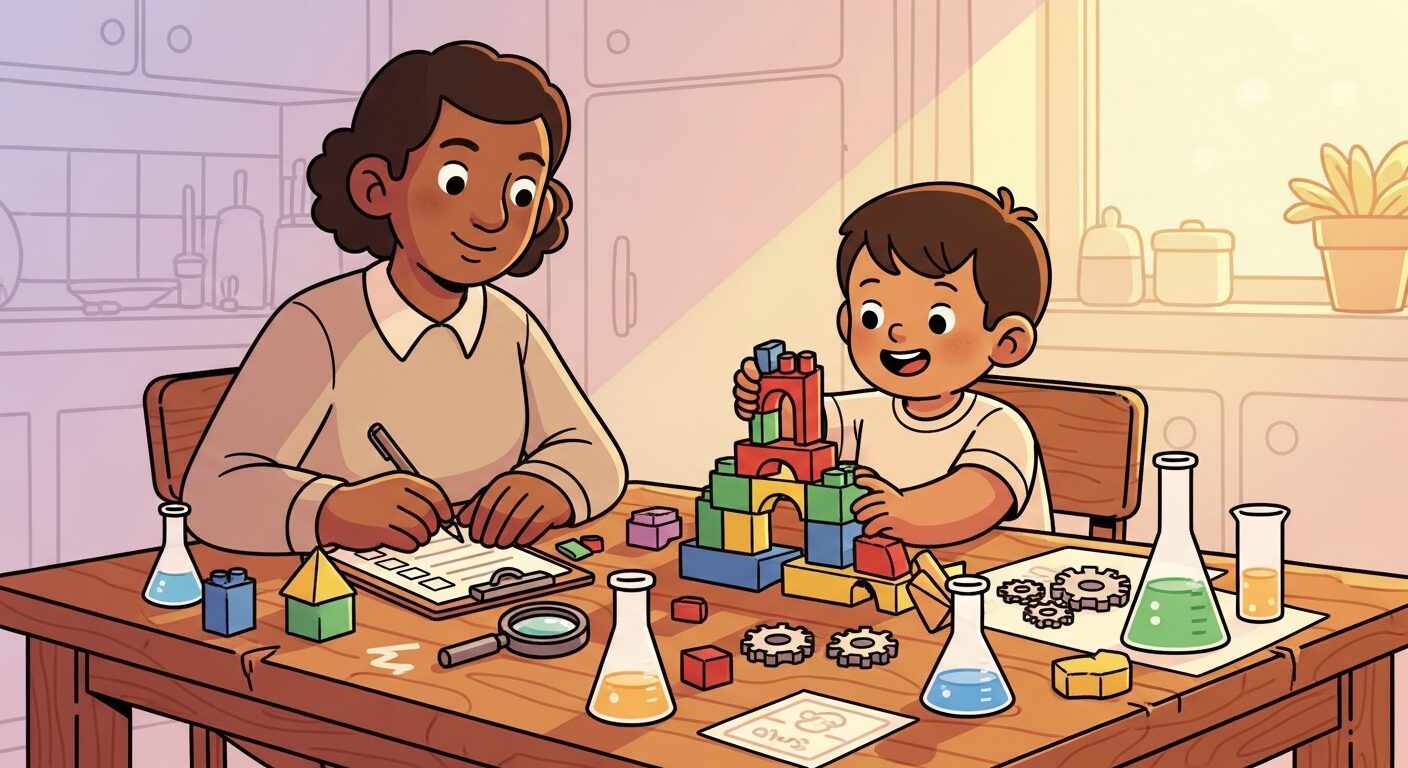
"Matching" Doesn't Work
Research shows near-zero effect (d ≈ .04) for matching instruction to a learning style.
Multimodal Is Better
Combining words + pictures + hands-on benefits everyone, regardless of "type."
Preferences, Not Labels
Treat styles as temporary preferences that change with task, mood, and development.
Build Flexibility
Start with what works, then gently stretch into new ways of learning.
What the Evidence Actually Says
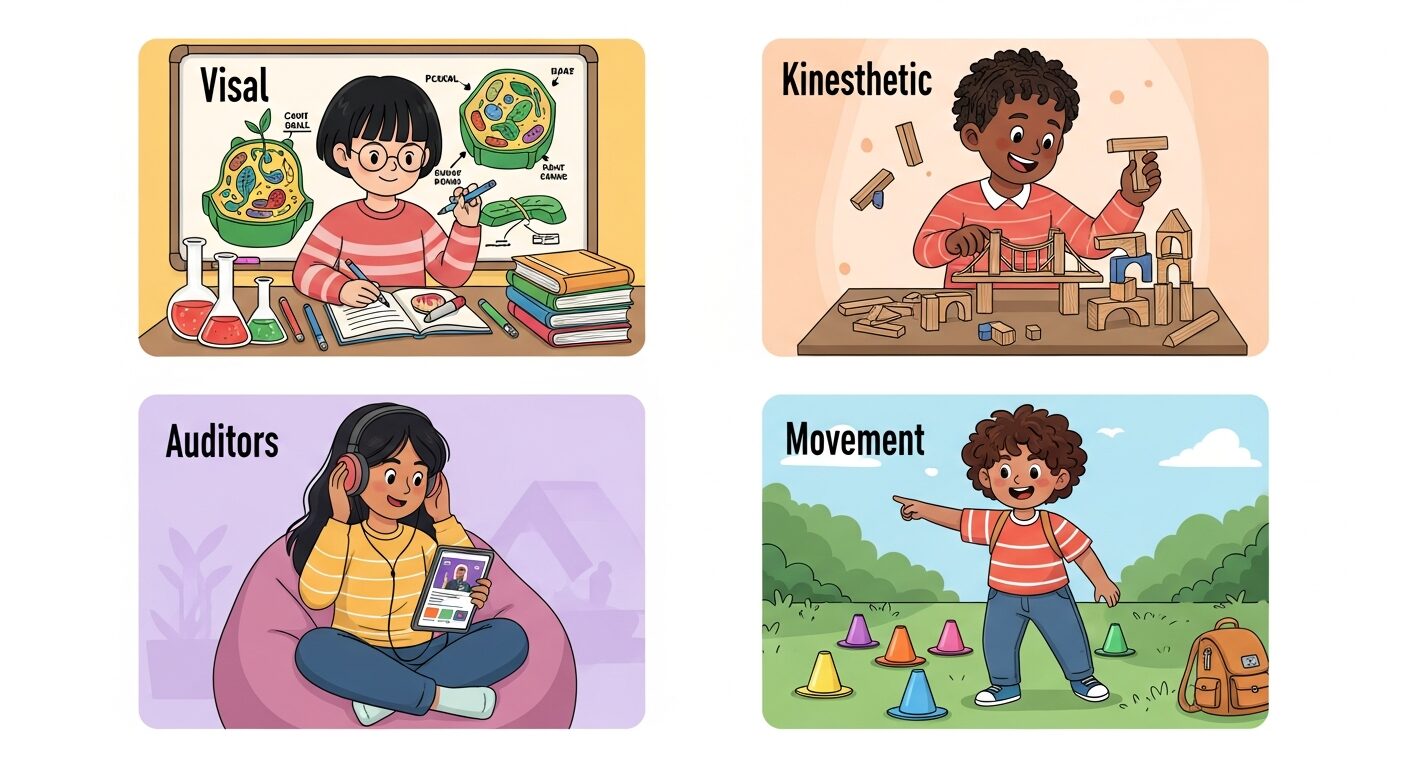
The Meshing Hypothesis
Most learning-styles models claim that matching instruction to a child's preferred modality (visual, auditory, kinesthetic) improves learning. A landmark 2008 review in Psychological Science in the Public Interest found that evidence for this "meshing hypothesis" is weak, with matching studies showing near-zero effects (d ≈ .04).
Why Pigeonholing Is Risky
The danger isn't using pictures or hands-on learning—those can be excellent. The risk is concluding "my child can only learn one way," which may reduce willingness to practice important but less-preferred modes like reading graphs, listening carefully, or writing explanations.
What Works Instead
Universal Design for Learning (UDL)
Vary how information is presented, how children act and express, and how they are engaged—so activities work for more children, including multilingual and neurodivergent learners.
Multimodal Instruction
"Match the representation to the content," not to the child. Research shows people learn more deeply from words + pictures combined than from words alone.
Executive Function Supports
Inhibitory control, working memory, and cognitive flexibility are central to goal-directed learning and predict how easily children can plan, persist, and manage frustration.
Growth Mindset Framing
Normalize iteration, strategy changes, and help-seeking as part of doing STEM. Focus on "strategies, effort, and iteration" rather than fixed ability.
At-Home Observation Toolkit
A research-aligned approach treats "learning style" as a hypothesis to test and regularly update, not a label to assign. Use these tools to discover what actually helps your child.
Working Definition
Learning preferences and supports: The conditions and representations that currently make it easier for your child to begin, persist, understand, and communicate learning—which may differ by task, topic, mood, fatigue, and environment.
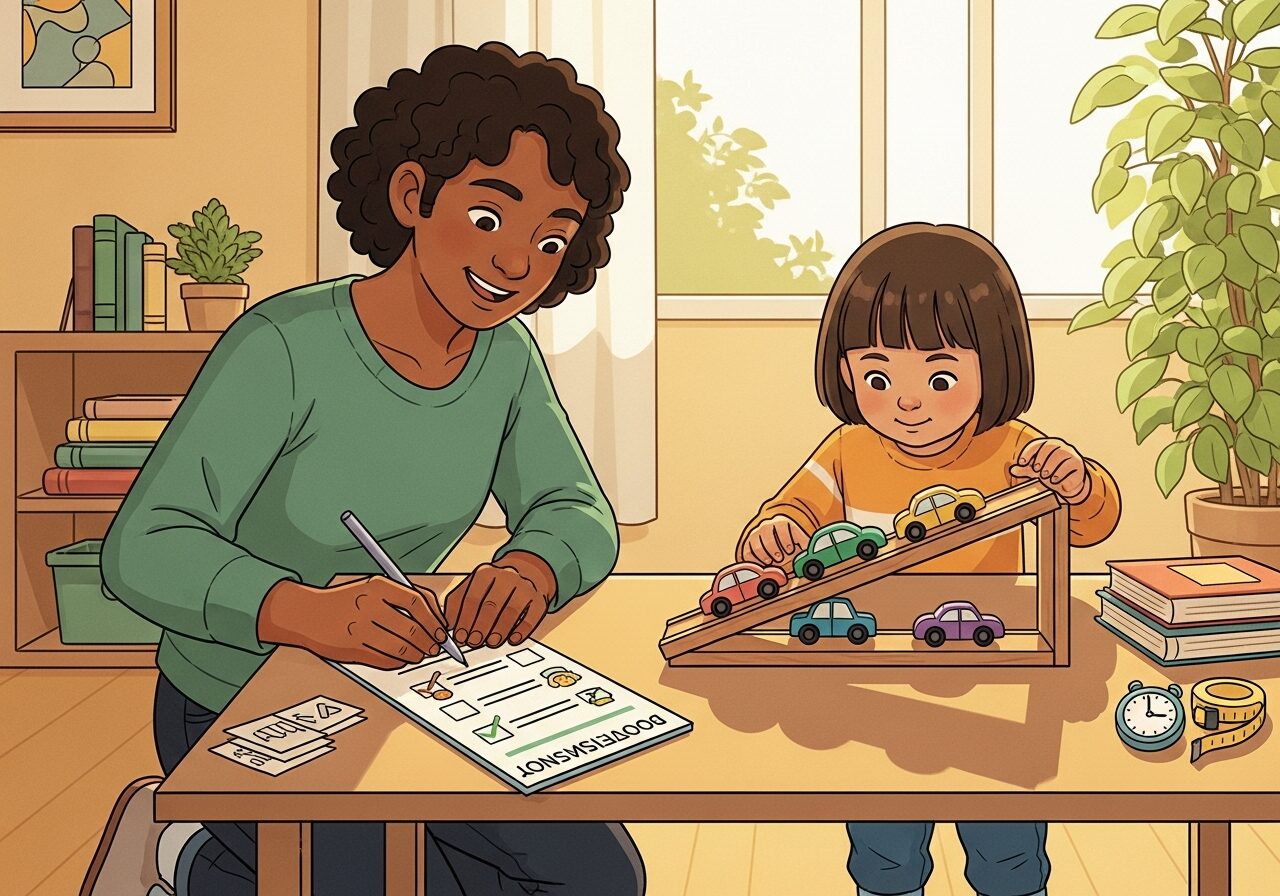
4-Step Observation Process
Choose an Anchor Activity
Pick a simple activity you can repeat weekly with small changes (ramp-and-roll, plant growth, paper helicopters).
Observe Across 3 UDL Lenses
Vary Representation (pictures vs. spoken vs. written), Action/Expression (draw vs. build vs. explain), and Engagement (choice, collaboration, novelty).
Track Outcomes That Matter
Instead of "did they like it," track: time-to-start, persistence, independence, accuracy, frustration recovery, and ability to explain.
Update Monthly
Preferences change with development, sleep, stress, and topic interest. Profiles should be living documents.
Mini Preference Probes
Structured observations (not clinical assessments) to reveal what supports help most.
Instruction Format Swap
5–8 minGive the same direction in two formats (spoken + picture; or written + demo). Note which reduces confusion and increases independence.
Explain-Back
3 minAsk the child to explain what they did using a modality you choose: draw it, tell it, write 2 sentences, or record a 30-second video.
Executive-Function Load
5 minIncrease planning demand slightly (add a 3-step sequence, or ask them to gather materials independently). Note where breakdown occurs.
Weekly Observation Cycle
Repeat this cycle for 4 weeks to build a meaningful preference profile.
Home Observation Checklist
Rate each domain 0–3: 0 = made it harder, 1 = no change, 2 = helped somewhat, 3 = helped a lot.
| Domain | Observable Indicator | Score |
|---|---|---|
| Start | Begins within 2 minutes without conflict | 0123 |
| Persist | Continues after error or failure | 0123 |
| Understand | Can restate the goal/steps | 0123 |
| Explain | Shares claim + evidence (age appropriate) | 0123 |
| Regulate | Uses a strategy to calm/refocus | 0123 |
Preference Profile Card
Rate each dimension 0–3. Update monthly. This is a living document, not a permanent label.
Stretch Goals (choose 1–2 for the month)
- • "Use a simple data table instead of drawing"
- • "Explain with a diagram instead of words"
- • "Try a 3-step plan without reminders"
Adaptation Selection Flowchart
When your child resists or struggles, identify the barrier and choose a response.
Child resists or struggles
What is the barrier?
Change Representation
- Use picture steps + quick demo + fewer words
- Add diagram or model; link words to visuals
- Check understanding: child explain-back
Change Engagement + EF supports
- Make goal smaller + add timer + offer choice
- Chunk steps + checklist + reduce materials
- Check energy: snack, break, or body movement first
Change Expression options
- Offer: draw, tell, build, photo/video, or write
- Provide sentence starters or graphic organizer
- Let child choose how to "teach someone else"
Change Environment + Sensory supports
- Reduce noise/visual clutter; offer headphones
- Add movement breaks or fidget tools
- Adjust materials: gloves, tongs, covered containers
Equity, Multilingual, and Neurodiversity Considerations
Learning is shaped by context and culture. Equitable STEM opportunity requires intentional design. Use UDL to reduce barriers rather than expecting children to "fit" a single format.
Multilingual Support
- • Allow home language for brainstorming and explaining
- • Add bilingual labels and picture cues
- • Use sentence frames as scaffolding
Neurodiversity
- • Provide self-regulation supports proactively
- • Avoid framing differences as deficits
- • Offer sensory accommodations naturally
Anti-Labeling Language
- • Use strengths-based, non-stigmatizing descriptions
- • Say "learns best with..." not "can only learn by..."
- • Avoid identity-limiting labels
Three Parent Scripts for Growth Mindset
"That strategy of drawing it first really helped you plan. What strategy might work for this part?"
"Scientists redesign all the time. Your second try was way more stable—what did you change?"
"Let's start with the checklist since that helps you. Then we'll try one step without it."
15 STEM Activities with Built-In Adaptations
Each activity includes a core experience plus targeted adaptations for common preference profiles. Click any age band to explore.
Activity Comparison Table
All 15 activities at a glance. Filter by age band.
| Activity | Age | Cost | Time | Skills |
|---|---|---|---|---|
| Ramp & Roll | Preschool | $ | 15–25 min | SEPMATHEF |
| Sink-or-Float Lab | Preschool | $ | 10–20 min | SEPCOMM |
| Shadow Tracker | Preschool | $ | 5–10 min+ | SEPMATHCOMM |
| Paper Helicopter | K–2 | $ | 20–35 min | SEPMATHEF |
| Mini Weather Station | K–2 | $ | 5 min/day | SEPMATHCOMM |
| Unplugged Coding Maze | K–2 | $ | 15–25 min | CTEFCOMM |
| Water Filter Challenge | 3–5 | $ | 45–60 min | ENGSEPMATHEF |
| Kitchen Fractions Lab | 3–5 | $ | 30–45 min | MATHSEPCOMM |
| Family Data Science | 3–5 | $ | 30–45 min+ | SEPMATHCTCOMM |
| Pendulum Investigation | 6–8 | $ | 45–70 min | SEPMATHEF |
| Cryptography | 6–8 | $ | 30–50 min | CTCOMM |
| pH Indicator Series | 6–8 | $ | 40–60 min | SEPMATH |
| Home Energy Audit | 9–12 | $ | 60–120 min | SEPMATHCTEF |
| Yeast Respiration | 9–12 | $ | 45–75 min | SEPMATH |
| Weather Data Coding | 9–12 | $ | 60–150 min | CTMATHSEP |
Parent FAQs
Key Sources
Pashler, H., et al. (2008). Learning Styles: Concepts and Evidence. Psychological Science in the Public Interest, 9(3), 105–119.
View sourceHattie, J. & O'Leary, M. (2025). Learning Styles: An Open-Access Reflection. Educational Psychology Review.
View sourceRogowsky, B.A., et al. (2015). Matching Learning Style to Instructional Method. Journal of Educational Psychology, 107(1), 64–78.
View sourceCAST (2024). Universal Design for Learning Guidelines 3.0.
View sourceMayer, R.E. (2020). Multimedia Learning (3rd ed.). Cambridge University Press.
Paivio, A. (1991). Dual Coding Theory: Retrospect and Current Status. Canadian Journal of Psychology, 45(3), 255–287.
Mueller, C.M. & Dweck, C.S. (1998). Praise for intelligence can undermine children's motivation and performance. Journal of Personality and Social Psychology, 75(1), 33–52.
Coffield, F., et al. (2004). Learning Styles and Pedagogy in Post-16 Learning: A Systematic and Critical Review.
National Academies (2018). How People Learn II: Learners, Contexts, and Cultures.
View sourceDiamond, A. (2013). Executive Functions. Annual Review of Psychology, 64, 135–168.
View source